A History of Trinity United Methodist Church
Trinity United Methodist Church in Ewing, New Jersey, has a rich and inspiring history that reflects resilience, faith, and the enduring power of community. The story begins with an extraordinary discovery in 2007, when old church records, Bibles, and religious books dating back to the 1830s were uncovered. Though some were faded and fragile, these documents provided a remarkable glimpse into the life of a congregation that has persevered for nearly two centuries.
The roots of Trinity’s story are deeply intertwined with the growth of Trenton itself. Originally home to the Lenape, Trenton later welcomed waves of immigrants—Dutch, English, Irish, German, Polish, and Jewish families—who shaped the city’s culture and industry. By the 19th century, Trenton had become a hub of iron, steel, pottery, and rubber production. Amid this vibrant city, Methodism flourished, with early preachers like George Whitefield and Francis Asbury introducing the faith to the community. The First Methodist Church of Trenton, often called the “Cathedral of Methodism in New Jersey,” became a beacon of spiritual guidance.
However, not every path was smooth. In 1846, disagreements within the congregation led to the founding of the Front Street Methodist Episcopal Church. Early pastors faced challenges that tested both their patience and the congregation’s resolve. Rev. Mr. Swartz’s inability to preach in German led many members to leave, and later leaders like Rev. Steiner and Rev. Blair, despite their best intentions, faced obstacles that shook the church. Yet, through it all, the faithful few who remained trusted in God’s guidance and kept the dream of a thriving congregation alive.
By 1846, members of the overcrowded Green Street M.E. Church stepped forward, renting the Front Street building and establishing what became the Second Methodist Episcopal Church of Trenton. Their courage and dedication set the foundation for growth. Trustees and leaders worked tirelessly, raising funds through subscriptions, overseeing property improvements, and creating spaces for the poor and disadvantaged. Women played vital roles in fundraising and outreach, even when their contributions were listed only as “wives” in official records.
Expansion continued with the founding of State Street Methodist Church in 1859, which quickly became a hub of worship, education, and social engagement. Sunday schools flourished, music filled the sanctuary, and members dedicated themselves to service, often raising significant funds for missions.
Throughout the late 19th and early 20th centuries, State Street Church demonstrated remarkable adaptability. Trustees managed finances during economic depressions, modernized the building with electric lights and improved heating, and oversaw the construction of memorial projects such as a tower in honor of Nathan R. Ivins. Pastors like Dr. Joe E. Smith and Rev. Isaac L. Woods guided the congregation through both spiritual and civic matters, ensuring that the church remained a vibrant presence in Trenton.
Even in times of public health crises, like the smallpox outbreak of 1909, or during the Great Depression, the church remained a center of care and generosity. Women’s societies and youth groups contributed enormously, organizing church suppers, bazaars, recreational programs, and wartime support for soldiers. The Kum Joy Nus Class and leaders like Mrs. Apgar exemplified a spirit of compassion and action that has left a lasting legacy.
Significant milestones punctuate the church’s history, including the 1942 decision to drop “Episcopal” from its name, the installation of electrically operated bells in 1945 through the generosity of the Van Horn family, and the continuous preservation of its historical records. Personal memories of Sunday School, choirs, picnics, and community events highlight the warmth, joy, and fellowship that have always characterized Trinity United Methodist Church.
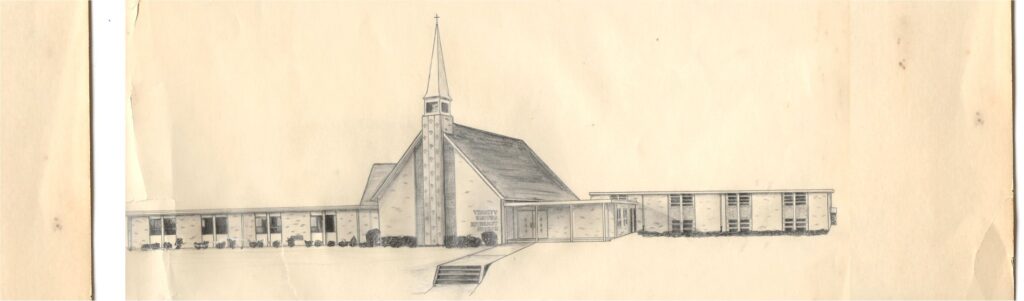
From its humble beginnings, through periods of hardship and growth, Trinity has stood as a beacon of hope, faith, and community. Its history reminds us that dedication, courage, and love for one another can overcome challenges, and that a faithful congregation, united in purpose, can leave a lasting impact. Today, Trinity United Methodist Church continues to thrive in Ewing, NJ, carrying forward a legacy of service, worship, and joy that began nearly two centuries ago.
The story of Trinity is a story of perseverance, optimism, and unwavering faith—a history that inspires all who enter its doors to believe in the power of God’s guidance and the strength of a caring community.